Who Has the Upper Hand in Today's Housing Market?

Ask around and almost every homebuyer out there wants to know if there’s a way to get a better deal. And just about every seller wants to know if they'll still get top dollar.
The interesting thing is... both can be right at the exact same time. It just depends on where you live.
That's because today's housing market isn't moving in one direction anymore. Some markets clearly favor buyers. Others still favor sellers. But most are sitting somewhere in the middle.
And knowing which market you're actually in can completely change the strategy you use to buy or sell (and what expectations you should have). Let’s break it down.
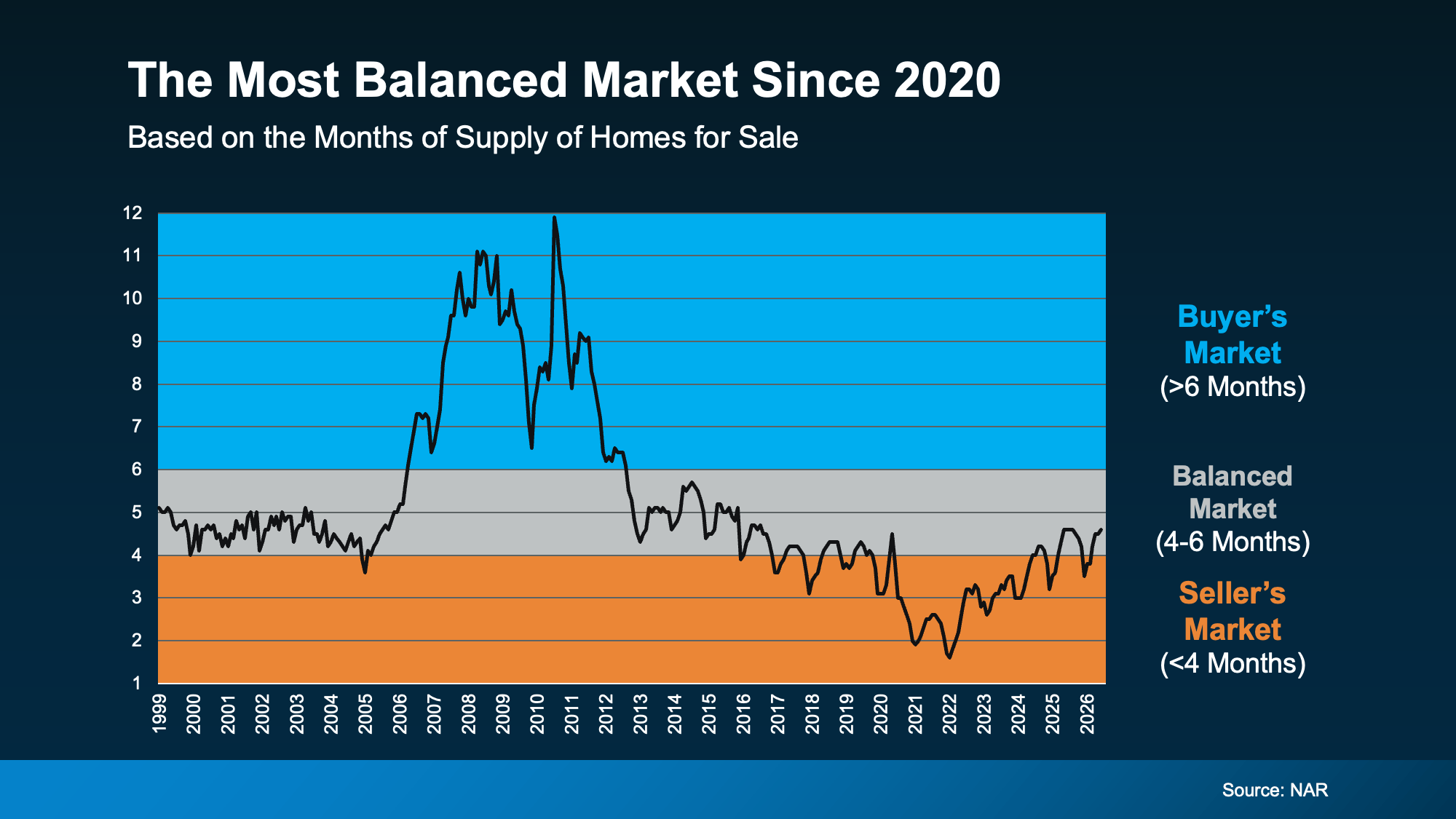
So how do you know which market you're in? There's one number that tells the story faster than anything else: the months' supply of homes for sale. It's the clearest signal of who's got leverage – and what strategy you'll need. Think of it like this.
Imagine no additional homes were listed starting today. Months' supply tells us how long it would take to sell everything that's currently on the market based on today’s demand.
Generally speaking, if months’ supply is:
Fewer than 4 months: Sellers usually have the advantage.
4 to 6 months: Buyers and sellers are on more equal footing.
More than 6 months: Buyers can usually negotiate for a better deal.
Right now, the National Association of Realtors (NAR) data says that number is 4.6 and that puts the overall market back in balanced territory (see graph below):
Stay up to date on the latest real estate trends.



The right strategy matters more than old market assumptions.

More time on market can mean more room to negotiate.

Lower asking prices are bringing buyers back.

Lower asking prices and better supply are easing the search.

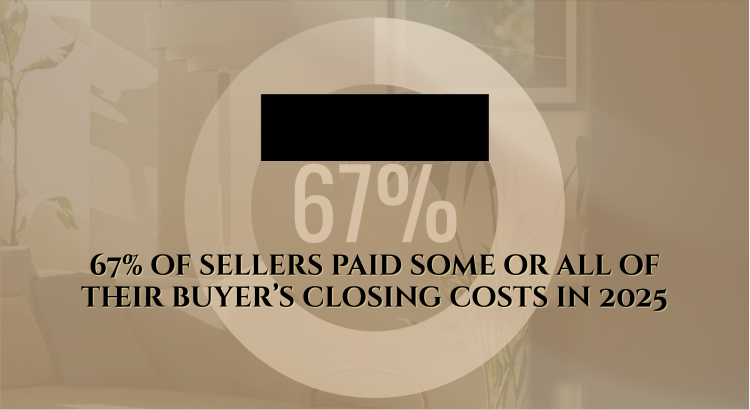
Negotiation is becoming part of the selling process again.
You’ve got questions and we can’t wait to answer them.